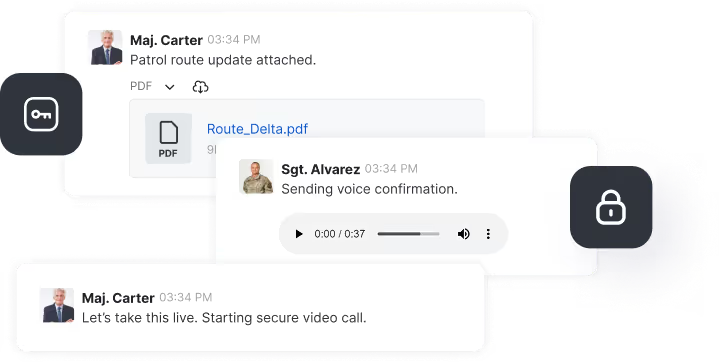
Government chat platforms are revolutionizing how public agencies communicate with citizens and deliver services. This guide explores how real-time communication technology enables governments to meet rising citizen expectations, improve service accessibility, and enhance operational efficiency. Learn about the key benefits of implementing secure government chat solutions, overcome common challenges like data privacy and legacy systems, and discover how government chat strengthens trust while modernizing internal collaboration across departments and agencies.
Key takeaways:
- 71.5% of UN Member States now operate at high or very high digital government development levels
- Government chat platforms increase citizen trust and accelerate issue resolution
- Secure collaboration tools improve cross-departmental coordination and decision-making
- Modern chat solutions help agencies meet stringent compliance requirements including GDPR and HIPAA
- Implementation requires careful planning around data sovereignty, infrastructure, and funding
Government chat might not have been a common term a few years ago, but today's digital landscape demands it. While businesses have embraced digital communication platforms for faster, more agile customer connections, government agencies have adapted considerably slower. Stringent regulations around data protection and limited funding have made digital transition challenging.
However, 21st-century government organizations must digitalize their communication processes to better engage with citizens and enable collaborative governance. Some agencies have already recognized this imperative. Germany's Onlinezugangsgesetz (OZG), for example, mandates that national government agencies introduce chat capabilities for citizens by 2025.
According to the United Nations E-Government Survey 2024, 71.5% of Member States now operate at high or very high digital government development levels, representing significant progress in digital transformation. The proportion of populations lacking access to digital government services decreased from 45.0% in 2022 to just 22.4% in 2024.
Government chat platforms revolutionize public service delivery by leveraging real-time communication capabilities. These seamless channels bridge gaps between citizens and government, enabling information access, service requests, stakeholder interaction, and policy influence. Additionally, they streamline resources, automate routine inquiries, and provide customized support.
This article explores the transformative benefits of implementing chat capabilities in government-citizen collaboration.
Benefits of government chat for citizen engagement
Government agencies must recognize the significance of incorporating chat capabilities to enhance collaboration. Here are the most crucial benefits of government messaging app solutions:
Increased trust in government institutions
Government chat platforms play an essential role in fostering public trust in institutions.
By offering direct and transparent communication channels, agencies demonstrate their commitment to accessibility and openness. Citizens can communicate directly with government representatives, voice concerns, seek clarifications, and receive timely responses. This openness builds trust by showing that government agencies are attentive to public needs and ready to address queries and concerns.
Accelerated issue resolution
Chat platforms provide quick and effective methods for addressing community issues. Rather than relying on conventional channels that involve lengthy procedures or delays, citizens can report problems or request assistance instantly.
Government representatives can respond in real-time, providing immediate solutions or guiding citizens through required processes. This efficient approach ensures that public concerns are resolved quickly, improving satisfaction and trust in government responsiveness.
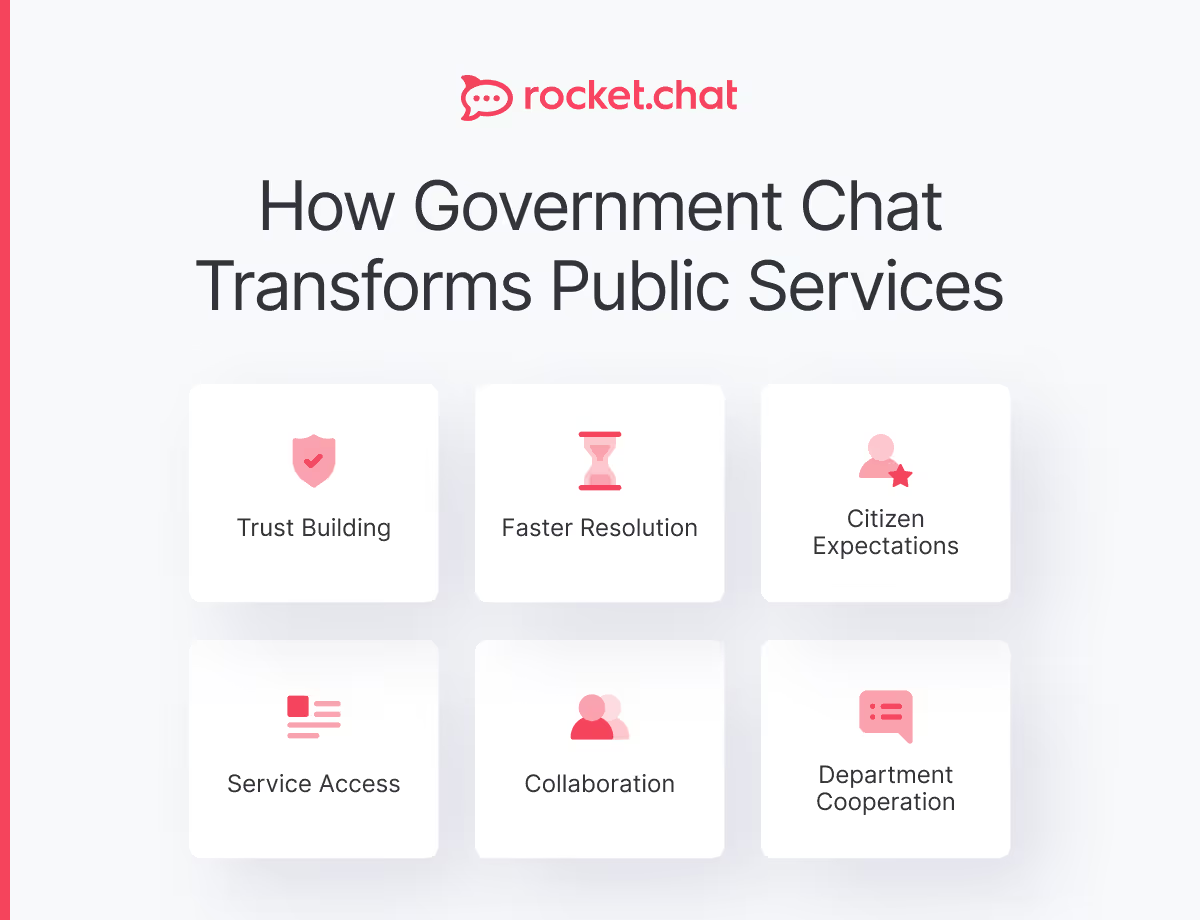
Meeting rising citizen expectations
Citizens now expect their governments to provide convenient and accessible services in an era of rapid technological innovation. Implementing chat capabilities helps governments meet these evolving demands.
According to McKinsey research, digitization could unlock over $3.5 trillion in economic value for government and public sectors. Government chat platforms provide comfortable and user-friendly communication channels, enabling seamless citizen-government collaboration. This technology adoption signals that government is evolving to meet citizen needs and preferences, strengthening satisfaction and engagement.
These platforms offer numerous benefits that enhance citizen collaboration and satisfaction. Citizens can quickly seek assistance, solve problems, and access multiple government services without lengthy phone calls or in-person visits by initiating conversations, asking questions, and receiving rapid responses. This streamlined process saves time and effort for both citizens and government employees, boosting service delivery effectiveness.
Facilitating easier access to public services
Government chat platforms simplify citizen navigation and use of public sector services, improving accessibility. Citizens can initiate conversations for guidance and assistance, eliminating complicated procedures, extended wait periods, or language barriers.
Government representatives provide step-by-step instructions, clarify questions, and assist citizens in completing applications or accessing information, especially helping differently abled, marginalized, and elderly populations.
Chat platforms can be designed to meet accessibility standards, making them usable for people with disabilities. Features like screen reader compatibility, keyboard navigation, and scalable fonts enhance accessibility for those with vision impairments, movement disabilities, or other accessibility needs.
Enhancing collaboration with citizens
Chat capabilities foster citizen collaboration by facilitating active participation in decision-making processes. Citizens can provide feedback, share ideas, and engage in policy discussions through chat platforms.
A more inclusive and participatory governance style becomes possible when governments solicit citizen input on various initiatives. By including citizens in decision-making, governments demonstrate commitment to democratic values and forge stronger community ties.
Promoting inter-departmental cooperation
Government chat platforms also facilitate synergy between various departments and agencies. Features like push notifications, video calling, and secure media sharing promote seamless information exchange, coordination, and collaboration by offering centralized communication platforms.
.avif)
Government chat for internal collaboration
By enabling easier, faster, and more intuitive communication among government employees, chat for internal collaboration significantly improves public service quality.
Chat platforms enhance efficiency, coordination, and decision-making processes in government organizations by streamlining communication channels and consolidating discussions and information in one location.
Key advantages for government operations
Traditional communication methods like email or face-to-face meetings can be time-consuming and slow decision-making. Real-time communication through chat platforms enables quick information, idea, and feedback sharing among government workers. This speed fosters rapid problem-solving and decision-making, ultimately improving public service effectiveness.
Rapid and intuitive communication encourages swift problem-solving and decision-making, eventually enhancing public service quality. Chat platforms enable government workers to collaborate more efficiently, improving outcomes for constituents by eliminating unnecessary delays and promoting seamless information exchange.
Centralized approach
Government chat platforms enable real-time communication, allowing team members to connect instantaneously and make informed decisions. File-sharing tools accelerate collaboration on documents and presentations, while threaded conversations maintain context and focus.
Robust search capabilities simplify finding past conversations and quickly retrieving crucial information. Integration with other tools enables seamless data sharing between platforms, boosting efficiency and accessibility.
Mobile accessibility allows team members to communicate and collaborate while on the move, enhancing remote work capabilities, government collaboration, and streamlining decision-making.

Omnichannel capabilities
Advanced chat platforms provide omnichannel capabilities by integrating multiple communication channels, including emails, calls, instant messaging, and file sharing. This seamless integration allows public service providers to connect across platforms.
Teams, departments, or organizations can share information easily regardless of chosen communication medium. Such integration improves coordination, reduces work duplication, and increases overall effectiveness.
Public service providers can streamline processes, eliminate communication bottlenecks, and ensure an integrated approach to service delivery with omnichannel capabilities. When teams can use multiple channels within a single platform, they're better equipped to interact effectively, disseminate information swiftly, and ultimately deliver better public services.
Improved cross-organizational project collaborations
Government chat platforms are essential for enhancing cross-organizational project cooperation. These systems enable specialists from multiple institutions and departments to communicate in real-time, share files, and exchange information seamlessly.
These platforms increase transparency and accountability in project development by driving collaboration. All relevant stakeholders can stay informed about changes, milestones, and potential challenges, enabling a better coordinated and efficient approach.
Effective collaboration improves project outcomes by stimulating efficient communication, encouraging knowledge sharing, and permitting quick decision-making. By facilitating cross-organizational communication through chat platforms, government initiatives benefit from combined expertise and resources, leading to successful and meaningful implementations.
Challenges of implementing government chat systems
Introducing government chat systems comes with various challenges that require careful consideration.
Data privacy and security
Government chat systems handle sensitive information, making data privacy and security paramount. Robust encryption, secure storage, access controls, and regular security assessments are essential for protecting citizen data.
Solutions allowing self-managed deployment typically satisfy strict data retention and usage criteria required by government agencies. For instance, Microsoft 365 was deemed non-compliant with GDPR for communication in Germany's public education system.
GDPR and regulatory compliance
Government chat systems must adhere to data protection regulations like the General Data Protection Regulation (GDPR) to protect personal information. Compliance with additional regulations, such as HIPAA (Health Insurance Portability and Accountability Act) for healthcare in the US, increases implementation and operational complexity.
There are vast regional differences when it comes to compliance, with European organizations choosing non US-based services like MS Teams due to compliance complexities.

Complex infrastructure requirements
Government organizations often have complicated IT infrastructures including legacy systems and heterogeneous technologies. Integrating chat systems into such environments requires extensive planning and coordination to ensure compatibility and efficient functioning.
Legacy software limitations
Government agencies often must work with outdated software that may lack integration capabilities with modern systems or require substantial modifications to accommodate chat functionality. Overcoming these restrictions may involve modernization initiatives, digital transformation efforts, or integration middleware to bridge gaps between old and new systems.
Budget constraints
Budgetary restrictions can make implementing government chat systems challenging. Providing adequate funds for procurement, development, infrastructure improvements, training, and ongoing maintenance can be difficult when competing with other priorities.
Extended implementation timelines
Setting up government chat systems frequently involves multiple stakeholders, including vendors and government agencies. Collaboration and coordination between various parties can cause delays, prolonging and complicating the implementation process.
Overcoming government chat implementation challenges
Successful implementation requires careful planning and proactive measures.
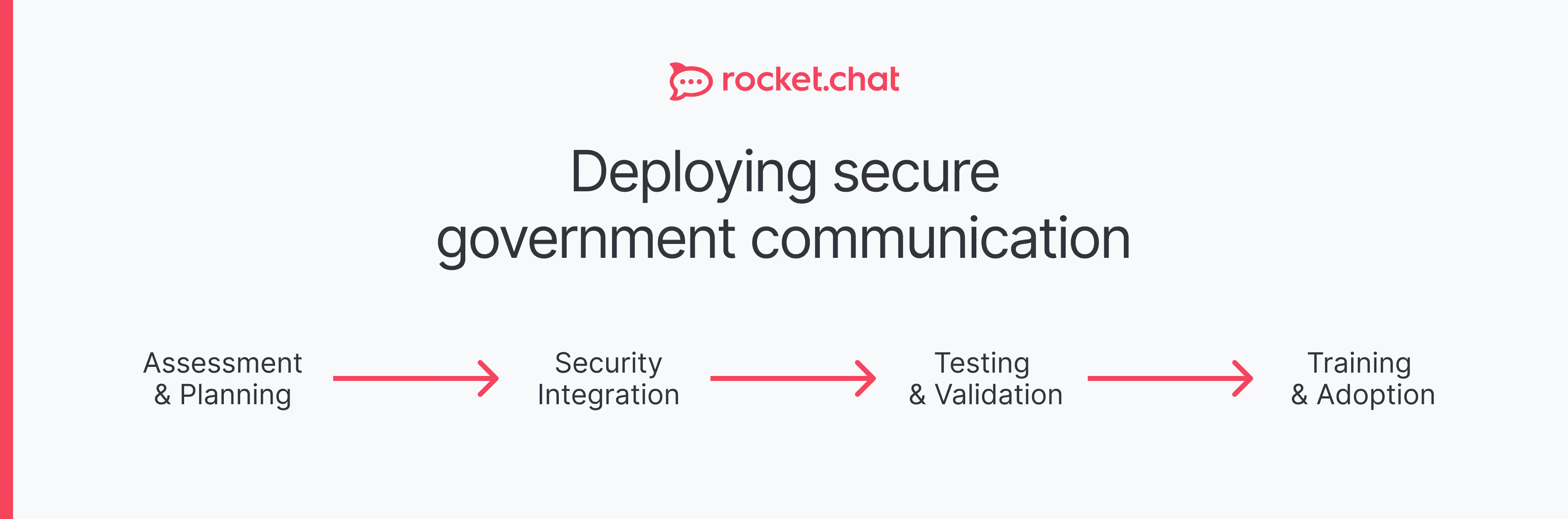
Security and compliance first
- Implement robust encryption, strict access controls, and regular security evaluations
- Ensure compliance with GDPR and other relevant regulations through privacy-enhancing measures
Infrastructure assessment
- Conduct thorough analysis of current infrastructure to identify integration requirements and incompatibilities
- Develop phased migration plans and identify middleware solutions for legacy software integration
Financial planning
- Advocate for sufficient funding and explore grant or partnership opportunities
- Establish clear ROI metrics to justify investment
Project management
- Create a framework with distinct milestones, roles, and communication channels
- Streamline implementation processes through effective stakeholder coordination
Rocket.Chat: secure government chat for enhanced public services
Successful government chat implementation significantly enhances public service quality. Secure chat systems maintain confidentiality and integrity of communication channels, fostering trust, enabling efficient information flow, and facilitating rapid resolution of citizen questions or concerns.
Rocket.Chat is an open-source team communication platform that extends government systems already in use. It facilitates secure team chat and real-time collaboration through chat, audio, and video conferencing, providing organizations with self-hosted or cloud-based messaging and collaboration services.
Rocket.Chat is extensively used in privacy-oriented sectors like government and defense, making it capable of meeting burgeoning government sector demands for robust communication platforms. It uses APIs extensively for seamless integration and brings departmental teams together for intuitive and agile collaboration.
Rocket.Chat meets critical criteria for advanced cybersecurity expected in government chat solutions. It helps organizations achieve full data sovereignty while collaborating with partner organizations. The platform supports encrypted messaging apps functionality and offers secure collaboration tools for sensitive government operations.
For organizations requiring additional security layers, Rocket.Chat provides air-gapped collaboration capabilities and supports defense communication system requirements. The platform excels in mission critical communications scenarios and meets military communication standards.
Government agencies can leverage Rocket.Chat for workplace team communication while maintaining communication security at the highest levels. As one of the most secure messaging apps available, it provides the foundation for encrypted messaging that governments require.
The platform also supports military messaging, military chat, and out-of-band communication capabilities. Whether deployed as a comprehensive chat app or as part of broader instant messaging platforms, Rocket.Chat delivers the security and functionality government agencies need.
Frequently asked questions about government chat
What is government chat and why is it important?
Government chat refers to real-time communication platforms that enable government agencies to interact with citizens and collaborate internally. It's important because 71.5% of UN Member States now require digital service delivery capabilities, and citizens increasingly expect instant, accessible communication with their government similar to private sector experiences.
How does government chat improve citizen services?
Government chat improves citizen services by providing instant access to information, reducing wait times for assistance, enabling 24/7 service availability, and allowing citizens to complete transactions without physical office visits. Studies show that 70% of citizens prefer accessing government services online, making chat capabilities essential for meeting public expectations.
What security features are required for government chat platforms?
Government chat platforms require end-to-end encryption, multi-factor authentication, role-based access controls, audit logging, compliance with regulations like GDPR and HIPAA, data sovereignty options, and regular security assessments. Self-hosted deployment options provide the highest level of control over sensitive government data.
How can government agencies overcome budget constraints when implementing chat?
Agencies can overcome budget constraints by starting with pilot programs, leveraging open-source solutions like Rocket.Chat, pursuing grant opportunities, demonstrating ROI through improved efficiency metrics, and implementing phased rollouts. Digital transformation can unlock over $3.5 trillion in economic value for government sectors, justifying initial investments.
What is the difference between government chat for citizens vs internal collaboration?
Government chat for citizens focuses on public-facing services like information requests, service applications, and issue reporting. Internal collaboration chat enables government employees to coordinate across departments, share files securely, conduct virtual meetings, and streamline project management. Both use cases require different security configurations and access controls.
How long does it take to implement a government chat system?
Implementation timelines vary based on agency size, infrastructure complexity, and integration requirements. Simple deployments can launch within weeks, while comprehensive enterprise implementations may require 6-12 months. Proper planning, stakeholder coordination, and phased rollouts help manage timelines effectively.
Can government chat platforms integrate with existing systems?
Yes, modern government chat platforms offer extensive integration capabilities through APIs, webhooks, and middleware solutions. They can connect with databases, CRM systems, document management platforms, and other government software. Rocket.Chat provides extensive API documentation for seamless integration with legacy and modern systems.
What training do government employees need to use chat platforms?
Government employees need training on basic platform navigation, security best practices, communication protocols, file sharing procedures, and compliance requirements. Most platforms offer intuitive interfaces that require minimal training, with comprehensive onboarding typically completed in 1-2 hours. Ongoing support and documentation ensure sustained adoption.
How do government chat platforms handle multiple languages?
Advanced government chat platforms support multiple languages through built-in translation features, multilingual interfaces, and localization options. This enables agencies to serve diverse populations effectively. Accessibility features also include support for citizens with different language preferences and disabilities.
What metrics should governments track for chat platform success?
Key metrics include citizen satisfaction scores, average response times, issue resolution rates, platform adoption rates, cost savings from reduced phone/in-person visits, employee efficiency improvements, and compliance audit results. Tracking these metrics demonstrates ROI and identifies areas for continuous improvement.
Frequently asked questions about <anything>


- Digital sovereignty
- Federation capabilities
- Scalable and white-labeled

- Highly scalable and secure
- Full patient conversation history
- HIPAA-ready

for mission-critical operations
- On-premise and air-gapped ready
- Full control over sensitive data
- Secure cross-agency collaboration
%201.svg)
- Open source code
- Highly secure and scalable
- Unmatched flexibility

- End-to-end encryption
- Cloud or on-prem deployment
- Supports compliance with HIPAA, GDPR, FINRA, and more

- Supports compliance with HIPAA, GDPR, FINRA, and more
- Highly secure and flexible
- On-prem or cloud deployment